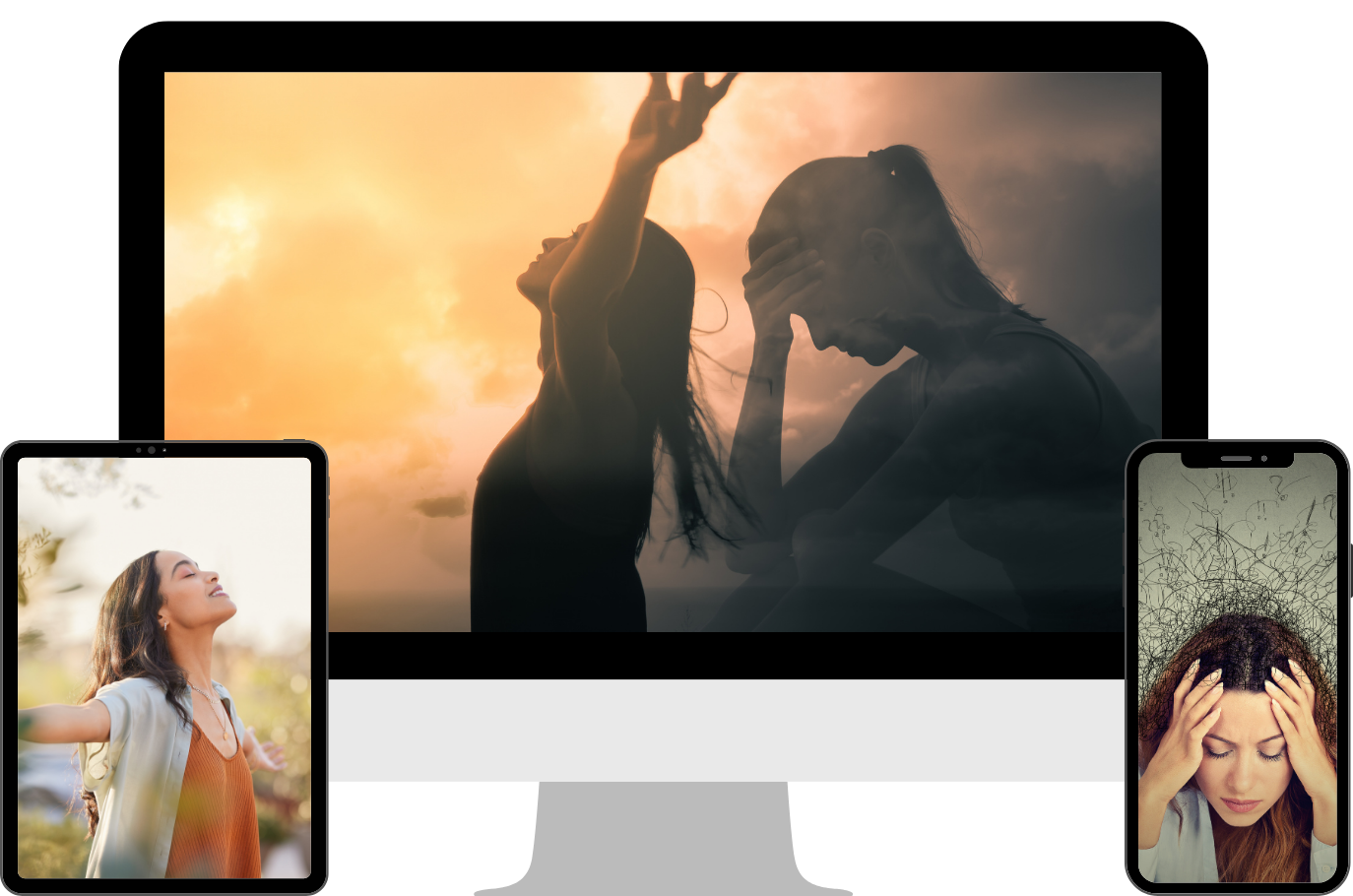
Social Anxiety Coaching

Social anxiety is not the same as shyness. Shyness is a personality trait or temperament. It's a general tendency to feel a bit reserved, self-conscious, or slow to warm up in new social situations. Most shy people can still function fine socially once they're comfortable — they might just take longer to open up, and shyness alone doesn't usually cause major distress or get in the way of daily life.
Social anxiety, on the other hand, can be intense and often involves real physical symptoms like a racing heart, sweating, nausea, and trembling, and can escalate into panic.
What Social Anxiety Really Is
Social anxiety is a nervous system response rooted in a deep fear of being judged, rejected, or humiliated. It's not a choice, and it's not something you can simply push through with enough willpower.
At its core, social anxiety is your brain treating social situations as threats. The same system that would activate if you were in physical danger activates when you walk into a room full of people, speak up in a meeting, or make small talk with a stranger. Your heart races. Your mind goes blank or goes into overdrive. Your body tenses. You want to disappear.
This response didn't come from nowhere. At some point, your nervous system learned that being visible around others wasn't safe. Maybe you were criticized, mocked, bullied, or excluded as a child. Maybe you grew up in an environment where saying the wrong thing had consequences. Maybe there was a specific moment of social humiliation that your brain filed as a threat, and it's been protecting you from a repeat ever since.
The conscious mind may have moved on from those experiences. The survival part of the brain has not.
The Exhaustion No One Sees
One of the hardest things about social anxiety is how invisible it is. People around you don't see the effort it takes just to show up.

You rehearse before and replay after. Before a conversation, you script what you'll say. Afterward, you dissect every detail, convinced you said something wrong.
You avoid or endure. You either skip social situations entirely or force yourself through them while managing a constant internal storm.
You shrink to stay safe. You hold back opinions, laugh at things that aren't funny, agree when you don't, all to avoid drawing attention or risking disapproval.
You feel lonely despite wanting space. The paradox of social anxiety is that isolation feels safer, but it also feels empty. You want closeness, but the anxiety just makes the cost of it feel way too high.
You compare yourself constantly. Everyone else seems comfortable, natural, at ease. You feel like you're the only one performing—pretending.
You're drained after interactions that others find easy. A casual lunch, a work call, a family gathering. For you, these require recovery time.
AN Invitation
If any of this sounds familiar, there's nothing wrong with you.
It just means you have been carrying a lot of pressure in social situations, even when others cannot see it. It can be hard to ask for support, especially if opening up already feels uncomfortable.
That's okay; I'm all about keeping you safe and honoring your journey. If something in you is curious, that's enough to start. We can hop on a no-pressure 20-minute call. You can ask me anything, and we'll see if we're a good fit to work together. I'd love to speak with you.
Why Pushing Through Social Anxiety Is Not Always Enough
The most common advice for social anxiety is exposure. Go to more events. Start more conversations. Push through the discomfort, and eventually it will ease. For many people, gradual exposure doesn't work. It doesn't solve the underlying issue. You can force yourself into a hundred different social situations and still feel the same dread before each one, because the root of your issue is more complex and hasn't been addressed.
The root is usually a set of subconscious beliefs. I'm not interesting enough. People will see through me. I don't belong. If they really knew me, they wouldn't like me. I'll be rejected or attacked. These beliefs feel like facts, but they're not. They're conclusions drawn from painful experiences, stored in the nervous system, and running on autopilot.
You can't override them by forcing yourself to socialize. You can only change them by reaching the level where they live and healing.
How I Help?
I'm Gail Mae. I've spent over 15 years helping people release the patterns that keep them stuck, and social anxiety is one of the issues I see often in my practice.
I use EFT (Emotional Freedom Techniques), sometimes called Tapping. EFT is particularly effective for social anxiety because it addresses both the physical response and the beliefs driving it.

Alongside EFT, my training in IFS, Matrix Reimprinting, grief recovery, and coaching deepens the work, so we're not just addressing symptoms, but the layered experiences that formed them.
During a session, we tap on the body's meridian points while working through the specific fears and feelings that come up around social situations. This calms the nervous system's threat response in real time. The racing heart settles. The mental fog clears. The dread loosens its grip.
Then we go deeper. We use EFT to find and release the original experiences that taught your nervous system to fear judgment. The moment someone's words made you feel small. The environment that taught you to be invisible. The belief that you had to earn your place. When these are processed and released, social situations stop triggering the same alarm. Not because you've pushed through the fear, but because the fear no longer has a foundation.
The goal isn't to turn you into an extrovert. It's to free you from the anxiety so you can be yourself around others
In a word, Gail Mae is exceptional.
Working with Gail was the best introduction I've ever had. As a very private person, she provided a safe environment where I could address the deepest issues I'd never shared with anyone. In a few months, I went from feeling like an insecure, invisible 19-year-old fighting to survive — to being a self-confident 43-year-old man with a strong presence.
— H.W
Take the First Step.
You don't need to have it all figured out before you reach out. Book a free 20-minute consultation. No pressure, just a chance to talk about what you're experiencing and explore whether this work is right for you. Healing is possible. Freedom is possible. And you don't have to do it alone.
Book A Consultation